

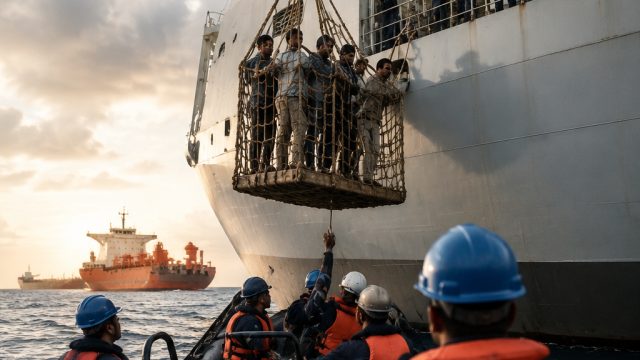
The United Nations has announced an urgent plan to evacuate thousands of sailors stranded in the Strait of Hormuz, a critical maritime corridor that facilitates a significant portion of the world's oil trade. This unprecedented move comes amid increasing tensions in the region, highlighting the ongoing crisis affecting global shipping operations.
The Strait of Hormuz, situated between Oman and Iran, serves as a vital passage for oil tankers and cargo ships. Currently, approximately 11,000 sailors have found themselves trapped in this narrow waterway due to a combination of political tensions and unforeseen maritime challenges. The UN’s decision to step in and coordinate a large-scale evacuation reflects the gravity of the situation.
The implications of this evacuation are profound, not only for the affected sailors but also for the global shipping industry. As the world's supply chains remain fragile, any disruptions in this crucial maritime route can lead to significant economic consequences. Experts are cautioning that the evacuation process will require meticulous planning to ensure the safety of all involved.
Shipping costs have already begun to escalate due to the uncertainties in the Strait of Hormuz. This region is responsible for around 20% of the world's petroleum consumption, and disruptions can lead to spikes in oil prices globally. Key points include:
The UN is mobilizing resources to provide assistance to the stranded sailors. This includes:
Countries around the globe are closely monitoring the situation, emphasizing the need for a stable maritime environment. Governments are expressing concerns regarding the safety of their nationals who are part of the maritime workforce. The urgency of the evacuation has prompted discussions on strengthening international maritime laws and enhancing cooperation among nations to prevent future crises.
The UN's upcoming evacuation operation for the stranded sailors in the Strait of Hormuz highlights a crucial moment in maritime safety and international relations. As tensions persist in this vital shipping route, the actions taken today will resonate in global commerce and maritime policies for years to come. Stakeholders across industries must remain vigilant and prepared to adapt to the evolving maritime landscape shaped by these urgent developments.